Flat feet are caused by excessive elasticity of your ligaments

Flat Feet – Causes, Symptoms and Treatment Options

Flat feet occur when the arch of the foot lowers while standing, causing more of the foot to come into contact with the ground.

In many cases, flat feet do not cause any problems. However, for some people, they can lead to pain, fatigue, or discomfort and may sometimes affect alignment up to the knees, hips, or lower back.

At Clinique Podiatrique St-Charles, located in Montreal’s West Island, we assess flat feet in adults, children, and athletes using an approach based on current scientific evidence.

Possible symptoms of flat feet

When flat feet become symptomatic, they may cause:

  • Pain or fatigue under the foot, especially in the arch or forefoot
  • Heel or ankle pain
  • A feeling of instability or repeated ankle sprains
  • Excessive inward rolling of the foot (overpronation)
  • Calf cramps or tightness in the Achilles tendon
  • Knee pain during physical activity
  • Uneven or asymmetrical shoe wear

It is important to note that a flexible flat foot without pain usually does not require treatment.

What causes flat feet?

Several factors may contribute to flat feet:

  • Anatomical or ligament-related factors, such as joint laxity or family foot structure
  • Biomechanical imbalance between the rearfoot and forefoot
  • Tight calf muscles or a shortened Achilles tendon
  • Excess body weight or prolonged standing
  • In children, delayed or abnormal arch development

Flat feet in children: what to know

Flat feet are often normal in early childhood.

Their prevalence is highest around 3 to 4 years of age. The arch develops gradually, and most flexible flat feet improve naturally before the age of 10.

Monitoring mainly helps distinguish between:

  • Flexible flat feet: mobile and usually harmless
  • Rigid flat feet: less common and requiring a more detailed assessment, for example in cases of tarsal coalition

When should you consult for flat feet?

A podiatric assessment is recommended if there is:

  • Persistent foot, ankle, or knee pain
  • Frequent instability or repeated sprains
  • Difficulty keeping up with activities in a child
  • Foot stiffness
  • Rapid worsening of symptoms

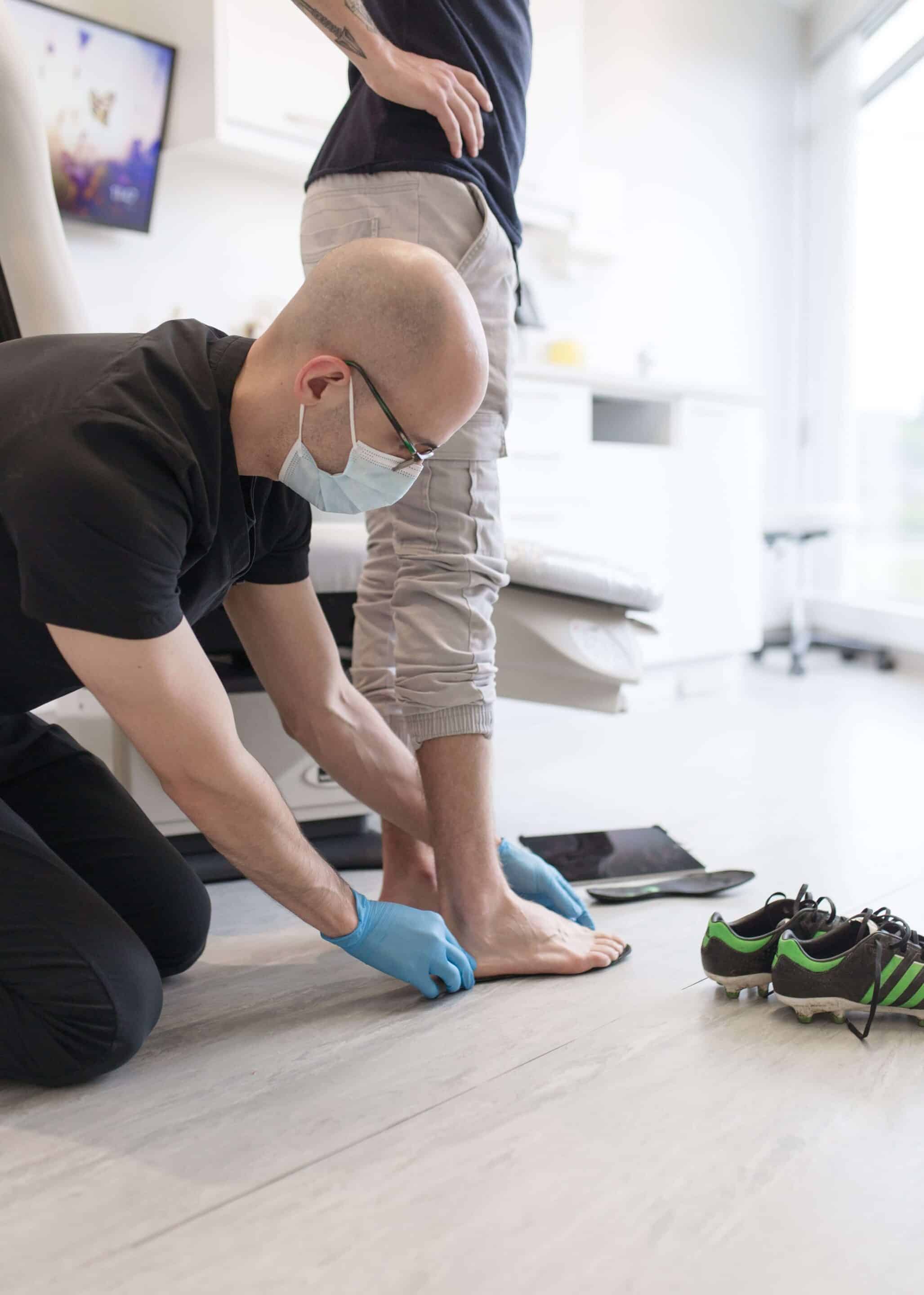
Podiatric assessment for flat feet

We evaluate:

  • Clinical findings, including painful areas, mobility, and strength
  • Biomechanical and postural alignment
  • Walking pattern, and running when needed
  • Footwear

Imaging: when is it necessary?

X-rays or ultrasound are not indicated for a painless flexible flat foot.

They are reserved for cases involving:

  • Persistent pain
  • Suspected rigid flat foot
  • Suspected underlying pathology
  • Trauma or injury

Flat feet treatment and management

1- Observation when there are no symptoms

For painless flexible flat feet, whether in children or adults:

  • No treatment is required
  • Clinical monitoring and shoe advice are usually enough

Current guidelines support observation rather than routine treatment in these situations.

2 – Foot orthotics: indications and important nuances

Orthotics are not automatically required.

What current evidence suggests:

  • In children without symptoms, there is no clear evidence showing benefit from either custom or prefabricated orthotics
  • In symptomatic flat feet, the quality of evidence remains low to very low
  • Custom orthotics have not clearly been shown to be superior to less expensive prefabricated orthotics in many cases

Orthotics may be considered when:

  • Pain is persistent
  • Simple measures are not enough
  • Sports or physical activity trigger symptoms

The goal is to reduce pain and improve comfort, not to permanently “correct” the arch.

3 – Exercises

Some studies suggest that:

  • Exercises combined with orthotics may be more effective than orthotics alone
  • Muscle strengthening may help improve function

The evidence remains moderate.

Exercises may target:

  • The intrinsic muscles of the foot
  • The calf muscles
  • The posterior chain
  • Ankle mobility

4 – Proper footwear

General recommendations include shoes with:

  • A stable heel
  • Adequate width
  • Good support
  • A flexible forefoot

For many patients, better footwear alone may already improve comfort.

5 – Personalized follow-up

Follow-up care may include:

  • Adjustments to orthotics, if prescribed
  • Changes to the exercise plan
  • Referral to physiotherapy when appropriate

Flat feet in children

Flat feet in children are often:

  • Flexible and painless up to about 6 or 7 years old
  • Likely to improve naturally over time

Consultation is recommended if a child has:

  • Pain
  • Excessive fatigue
  • Frequent falls
  • Foot stiffness
  • An unusual walking pattern

Possible treatment options, when symptoms are present, include:

  • Play-based exercises
  • Footwear recommendations
  • Orthotics if pain persists

The approach should remain individualized and cautious.

How to help prevent symptoms from getting worse

  • Choose stable, supportive shoes
  • Maintain flexibility in the Achilles tendon
  • Strengthen gradually
  • Increase activity progressively
  • Consult if pain lasts longer than 1 to 2 weeks

FAQ – Flat Feet

Are flat feet always a problem?

No. Most flexible flat feet are painless and do not require treatment.

Are orthotics always necessary?

No. Orthotics are mainly considered when there is pain. In many cases, prefabricated orthotics may be just as effective as custom orthotics.

Can I keep playing sports with flat feet?

Yes. Gradual progression and proper footwear are usually the priorities.

What about my child’s flat feet?

In most cases, the arch should simply be monitored as it develops naturally. If there is no pain or stiffness, no treatment is usually needed.

Pain or discomfort related to flat feet?

A podiatric assessment can help determine whether treatment is truly necessary and which option is best suited to your situation.